Create your WordPress site with AI in 60 seconds.
































Affiliate marketing is an effective way to generate revenue that is suitable even for those just starting out. Currently, new partners, tools, and solutions are constantly emerging in the affiliate marketing industry, which is valued at over £13 billion ($17 billion) worldwide.
Affiliate marketing is identified as the primary source of income for 31% of a specific customer base. At the same time, it is one of the most critical customer acquisition channels for 20% of brands. Approximately 54% of marketers consider affiliate marketing to be one of the top channels for generating new potential customers and sales. This means that affiliate marketing can be even more profitable for brands than paid/traditional search and media advertising.
What is Affiliate Marketing?
Affiliate marketing is an advertising model where a company pays commissions to third parties for every sale or specific action that occurs as a direct result of their marketing efforts.
The core concept of affiliate marketing is straightforward. The partner works to drive customers toward products and increase the brand’s sales by leveraging their influence and word-of-mouth marketing. Through affiliate marketing, companies invite content creators, influencers, and individuals from all over the world to help promote their products and boost conversions.
In return for these efforts, partners receive a commission or a set payment whenever one of the individuals they refer completes a purchase transaction. This is a simple, win-win situation.
Partners can include bloggers, webmasters, site owners, and even regular social media users.
How Does Affiliate Marketing Work?
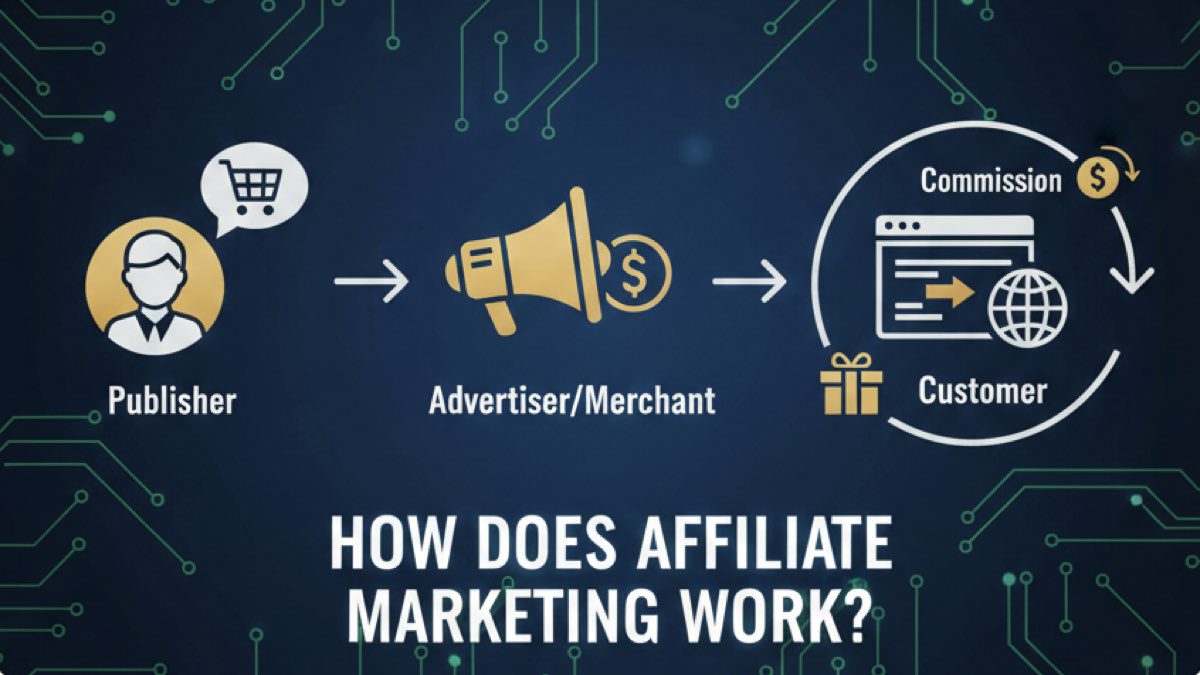
The basic concept of affiliate marketing is quite simple: increasing your sales chances by getting more people to share links to your products and services. Since affiliates are already connected with a specific audience, they can use their own influence to boost a company’s chances of success.
Affiliate marketing has become even more valuable following the pandemic. Approximately 56% of affiliate programmes saw their revenue increase during the lockdown months.
So, how exactly does affiliate marketing work? The process revolves around three core components:
The Seller
This is the company or organisation that creates the product or service to be sold. Sellers establish an affiliate marketing programme with pre-defined commission rules and strategies to attract new partners. They then incentivise people to join the affiliate network to earn money. Some sellers also provide their affiliates with useful resources and marketing content to help them drive sales. Furthermore, they provide each partner with a specific tracking URL or unique code to monitor sales.
The Affiliate
The affiliate is the individual or entity responsible for bringing new customers to the brand through affiliate marketing. An affiliate can be an individual or a company. They promote another brand’s product or service through blog posts, videos, social media content, and various other channels. By publishing a unique link or voucher code within their content, they provide trackable new leads for the company.
The Consumer
For an affiliate marketing system to function, there must be measurable sales. The consumer is the person who clicks on a specific link or uses the unique code provided by the affiliate to make a purchase. The affiliate sells the product or service to their audience and provides them with a reason to complete the transaction. When the customer makes a purchase using the affiliate’s unique code, the affiliate earns a commission.
What is an Affiliate Marketing Link?
An affiliate marketing link is one of the fundamental components of an affiliate marketing programme or campaign. Affiliates use this link to direct customers to the company they want to promote. It is also the method used by companies to track individuals who drive potential customers and sales to their products or services.
A simple affiliate marketing strategy looks roughly like this: The company creates an affiliate marketing programme that allows users to share specific links, URLs, and codes with their target audience.
Affiliates use these codes or links on their blogs, websites, social media, and marketing content to encourage customers to click the link and make a purchase. When a customer buys a product or performs the desired action (e.g., downloading a demo version), the interaction is confirmed by the store.
Then, using affiliate marketing tools, the store pays the affiliate a pre-determined commission. Commission rates vary depending on the company and payment strategy. Some companies pay affiliates a specific amount of money known as a flat rate for each transaction. Others may offer affiliates a certain percentage of the purchase amount.
Core Elements of Affiliate Marketing
1. Participants in the process
- Advertiser (company or brand): The business looking to promote its products or services.
- Affiliate: The person or entity promoting the advertiser’s products in exchange for a commission. Affiliates can be bloggers, site owners, influencers, and specialist networks.
- Affiliate marketing platform: The system that connects advertisers and partners, tracks clicks, sales, and other actions, and manages commission payments.
2. Working mechanism
- Affiliates sign up for the company’s affiliate programme and receive unique links or promo codes.
- They share these links through their own channels: websites, blogs, social networks, email newsletters, etc.
- When a user clicks on the link and performs the target action (e.g., purchase, registration, subscription), the platform tracks this action.
- Affiliates receive a commission for each confirmed action.
3. Payment models
- PPS (Pay Per Sale): Affiliates receive a commission for every sale made through their efforts.
- PPC (Pay Per Click): Affiliates are paid for every click on the affiliate link, whether or not a subsequent action occurs.
- PPL (Pay Per Lead): The affiliate is paid for every potential customer (lead) who, for example, registers or subscribes to something.
4. Advantages for advertisers
- Expansion of reach: Collaborating with affiliates allows the company to reach a wider audience.
- Profitability: Payment is only made for actual actions, which reduces risks for the company.
- Increased trust: Recommendations from well-known bloggers or influencers can increase trust in the product.
5. Advantages for affiliates
- Additional income: The opportunity to generate income from promoting products they already use or know about.
- Flexibility: Affiliates can choose which products or services to promote and determine their own promotion strategies.
6. Challenges and risks
- Competition: High levels of competition among affiliates can make it difficult to turn a profit.
- Content requirements: High-quality content must be created to engage the audience and earn their trust.
- Algorithm changes: Changes in social network or search engine algorithms can affect the visibility of affiliate links.
Affiliate marketing requires a strategic approach and constant analysis of results to be successful for both advertisers and affiliates.
Advantages of Affiliate Marketing

The advantages of affiliate marketing for companies include the following:
1. Expansion of the advertising network
Since affiliates choose the products they want to promote themselves, the company can reach various target audiences through different channels without spending additional resources on researching and segmenting these audiences.
2. Increased coverage
Various affiliates, including bloggers and social media users, help the company reach a wider audience than traditional advertising methods.
3. Authenticity and trust
Recommendations from affiliates who already use or sincerely recommend products can be perceived as more trustworthy by the audience compared to traditional adverts.
4. Savings in marketing costs
Thanks to the result-based payment model, companies only pay for actual sales or actions, making affiliate marketing more profitable.
5. Flexibility and adaptability
Companies can quickly adapt to market changes by collaborating with various partners and testing different promotion strategies.
6. Scalability
Affiliate marketing allows companies to quickly scale their promotion efforts without significant cost increases since they only pay for successful actions.
7. High profitability
Because payment is only made for successful conversions, companies can achieve a higher return on investment (ROI) compared to traditional advertising methods.
8. Fixed expenses
The result-based payment model allows companies to more accurately predict and control their marketing budgets. They know that every commission payment is linked to a specific sale or action.
9. Reduction of risks
Companies pay only for actual results, not for impressions or clicks that don’t convert. This reduces the risk of marketing spend being inefficient.
The advantages of affiliate marketing for affiliates include the following:
- Choice and control
The ability to choose products allows affiliates to maintain their authenticity and stay true to their personal brand or niche.
- Income growth
By selecting products that will interest their target audience, affiliates can increase their chances of making successful sales and therefore earning more commission.
- Long-term relationships
Affiliates who promote products effectively can build long-term relationships with companies and secure more collaboration opportunities in the future.


How Do Affiliates Earn Money?
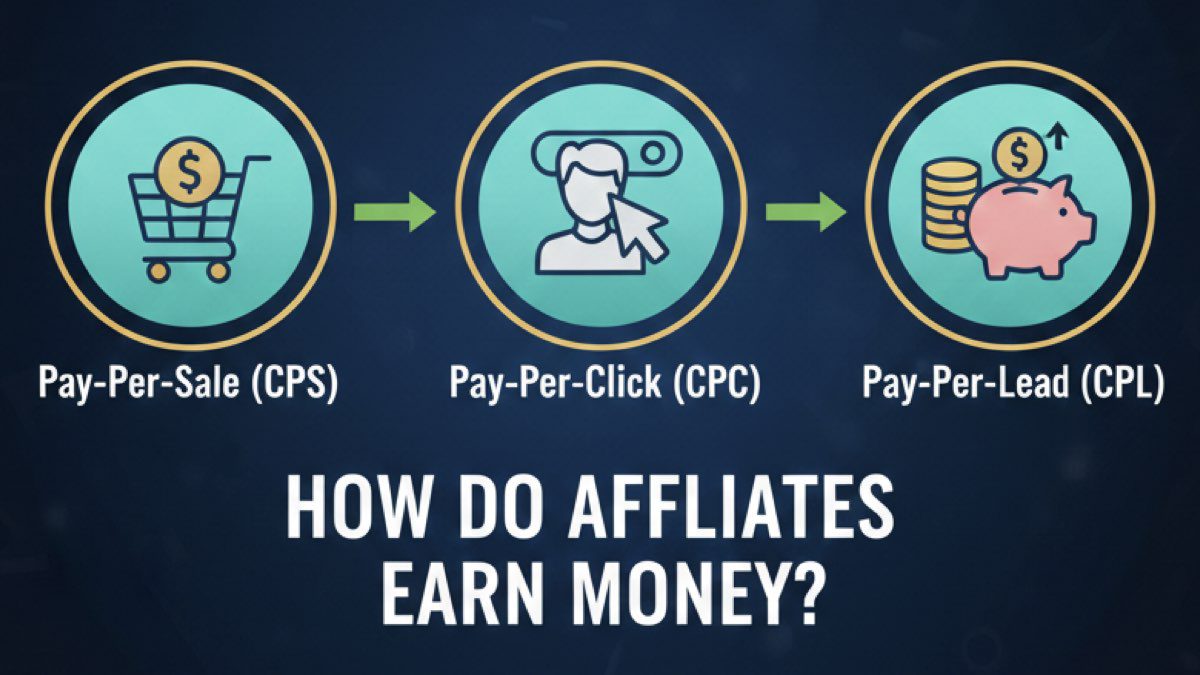
An affiliate’s income can vary significantly depending on the type of affiliate marketing and the effort they are willing to invest. Research suggests that the average earnings for an affiliate marketer are around £40,000 ($53,000).
So, how exactly do affiliates generate their income?
When an affiliate chooses a programme or product to promote, they are usually faced with a range of different payment or pricing models. These models determine which goals and actions the affiliate will be paid for.
Many programmes work on a system called “last click”. This means that the affiliates who receive the final click before the purchase get 100% of the payment.
Some of the most common earning methods for affiliate marketers include:
- Pay per sale: The standard affiliate marketing structure involves receiving a commission for every sale you generate. The seller pays the partner a percentage of the sale price or a flat fee when the referred customer successfully completes a purchase.
- Pay per action: This earns the partner a commission for every single action performed by the customer. This model can be applied to a range of different actions by consumers, including subscribing to a newsletter, clicking a page on the website, or requesting information via a contact form.
- Pay per install: In the pay per install model, the affiliate gets paid every time a customer installs something, such as a software solution or an app. Usually, the goal is to drive subscriptions and engagement rather than direct sales.
- Pay per lead: This is a more complex system where affiliates earn money based on the number of leads they add to the company’s sales funnel. This is a popular payment method for companies looking to expand their email lists or create new opportunities. Pay per lead offers are excellent for beginners as it’s often easier to generate leads than to make a sale.
- Pay per click: Pay per click is about generating traffic for websites and increasing brand awareness. In most cases, these affiliate payment methods are used by companies looking to increase visitor numbers without relying solely on search advertising and organic SEO traffic. Partners must direct their consumers from their own marketing platforms to the seller’s website.
How to Get Started in Affiliate Marketing?
Those looking to start in affiliate marketing must invest significant time, effort, and dedication to ensure the success of their ventures. However, building an affiliate marketing strategy isn’t actually as difficult as it seems. Some of the necessary steps include:
1. Choice of method and platform
First, affiliates must determine which platforms they want to use to build their audience. For example, some may prefer promoting content on niche thematic sites and review sites. These are sites that specifically address products aimed at solving the problems of a particular audience.
Other affiliates focus mostly on digital content creation. This can include activities like blogging, sharing info on social media, or promoting videos on YouTube. Digital content creators develop strong content to appeal to a specific target audience. The content they produce is educational, informative, and entertaining.
Additionally, it is possible to integrate affiliate marketing partnerships into courses, seminars, and events. There is no “one size fits all” strategy. Affiliates should ask themselves which platforms they use most frequently and understand best. Options can range from blogs to social media channels and pay-per-click solutions.
2. Choose a niche and target audience
Once the affiliate has determined the platform and methodology they will use to promote products, the next step is to choose a specific niche or target audience. Generally, it’s best for affiliates to choose a niche they are already familiar with and interested in. This helps them convey information in a trustworthy and authentic way.
It can also be useful to look at the popularity levels of each niche. For example, search engine result pages related to software and marketing are often dominated by giant blog sites with huge marketing budgets. Therefore, affiliates often prefer more untapped areas where competition isn’t so fierce.
3. Find your products
To earn income as an affiliate marketer, you need to ensure you are selling and promoting the right products. The promoted services or products must truly appeal to your target audience. Making the wrong decisions can damage the trust placed in you.
There are several great trading platforms where users can look for promotional solutions. Popular examples in the UK include:
- Awin
- Amazon Associates UK
- CJ Affiliate
- Rakuten Advertising
- Boots
- Marks & Spencer
- Currys
4. Affiliate marketing promotion strategy
Finally, when affiliates are brainstorming potential products for promotion or reviewing affiliate platforms, they must monitor their target audience carefully. At this point, they should ask themselves whether their audience would truly find a product or service valuable.
It’s best to stay within your own field of knowledge and niche as much as possible. For example, if you blog about food, you shouldn’t suddenly start promoting tech products. Additionally, it’s essential to ensure that the product or service you’re promoting is suitable for the platform you’ll be promoting it on.
For instance, content related to cosmetics and home decor is very well-suited for promotion on visual social networks like Instagram, TikTok, and Pinterest. Software and more complex environments may be better suited for YouTube and blogs.
What are the Popular Affiliate Marketing Programmes?
Affiliate marketing programmes is a term used to describe the systems companies use to support and reward their partners. Many different options exist, from the Amazon affiliate programme to niche solutions offered by smaller brands.
Some of the most popular affiliate marketing programmes include:
- Fiverr: An excellent option for affiliates who don’t want to promote physical products in WordPress blogs or social media posts. Fiverr allows you to earn money by driving new customers to the freelancer platform.
- BigCommerce: When you sign up for the BigCommerce affiliate programme, you can earn 200% of the first monthly payment of the customers you bring, or approximately £1,150 ($1,500) for enterprise customers. BigCommerce makes promotion easy and gives affiliates access to their own analytics and dashboards so they can track their affiliate earnings.
- Wix: Wix has its own dedicated affiliate programme that currently supports approximately 200 million people. The programme provides partners with all the tools they need to make sales, including customisable links and URL addresses. You can earn approximately £75 ($100) from each sale, making Wix one of the highest-paying affiliate programmes in the world.
- HubSpot: Like most affiliate programmes, HubSpot offers affiliates a free and easy way to start monetising their online audience. There is a 90-day cookie period to make tracking links easier. Furthermore, the average affiliate earns approximately £210 ($276) from each successful purchase.
- Shopify: The Shopify affiliate programme leverages a wide network of entrepreneurs, educators, content creators, and influencers who send direct referrals to the e-commerce platform. Once approved by Shopify’s affiliate managers, publishers receive unique affiliate links to share with their audiences. On average, affiliates earn approximately £45 ($58) for each referral who signs up for a paid Shopify plan.
Printful: The POD (Print on Demand) company Printful has more than 2 million partners registered in its programme. Participation is free, and each publisher receives a unique link to share with their viewers. Printful affiliates receive a 10% commission from every purchase they are directly responsible for within the scope of Printful.